

Living in Southwest Florida means your air conditioner doesn’t get a winter break. While homeowners up north shut their systems down for months at a time, yours is running nearly year-round, fighting heat, humidity, and salt air from roughly March through November. That kind of workload takes a toll. So how often should you service your air conditioner to keep it running reliably? The short answer: at least twice a year, but Florida’s climate often demands closer attention than that.
At Air Necessity, our technicians service AC systems across Cape Coral, Fort Myers, Naples, and the surrounding areas every single day. Because our team works on a non-commissioned pay structure, the advice we give isn’t motivated by upselling, it’s based on what we actually see happening inside these units. And what we see is that skipped maintenance is the number one reason systems fail earlier than they should.
This article breaks down exactly how often your AC needs professional attention in Florida, the best time of year to schedule it, and what regular servicing actually does for your system’s lifespan, efficiency, and your monthly energy bill. Whether your unit is brand new or pushing ten years old, you’ll walk away knowing exactly what your system needs, and when it needs it.
How often you should service your AC in Florida
Most HVAC manufacturers and industry organizations recommend professional AC service at least once a year. That works fine in climates where the system sits idle for several months. In Florida, that baseline is rarely enough. Your system runs eight to ten months out of the year, sometimes longer, which means it accumulates wear, dust, and moisture at a much faster rate than systems in cooler states. Treating a Florida AC like a northern one is one of the fastest ways to shorten its lifespan.
The standard recommendation: twice a year
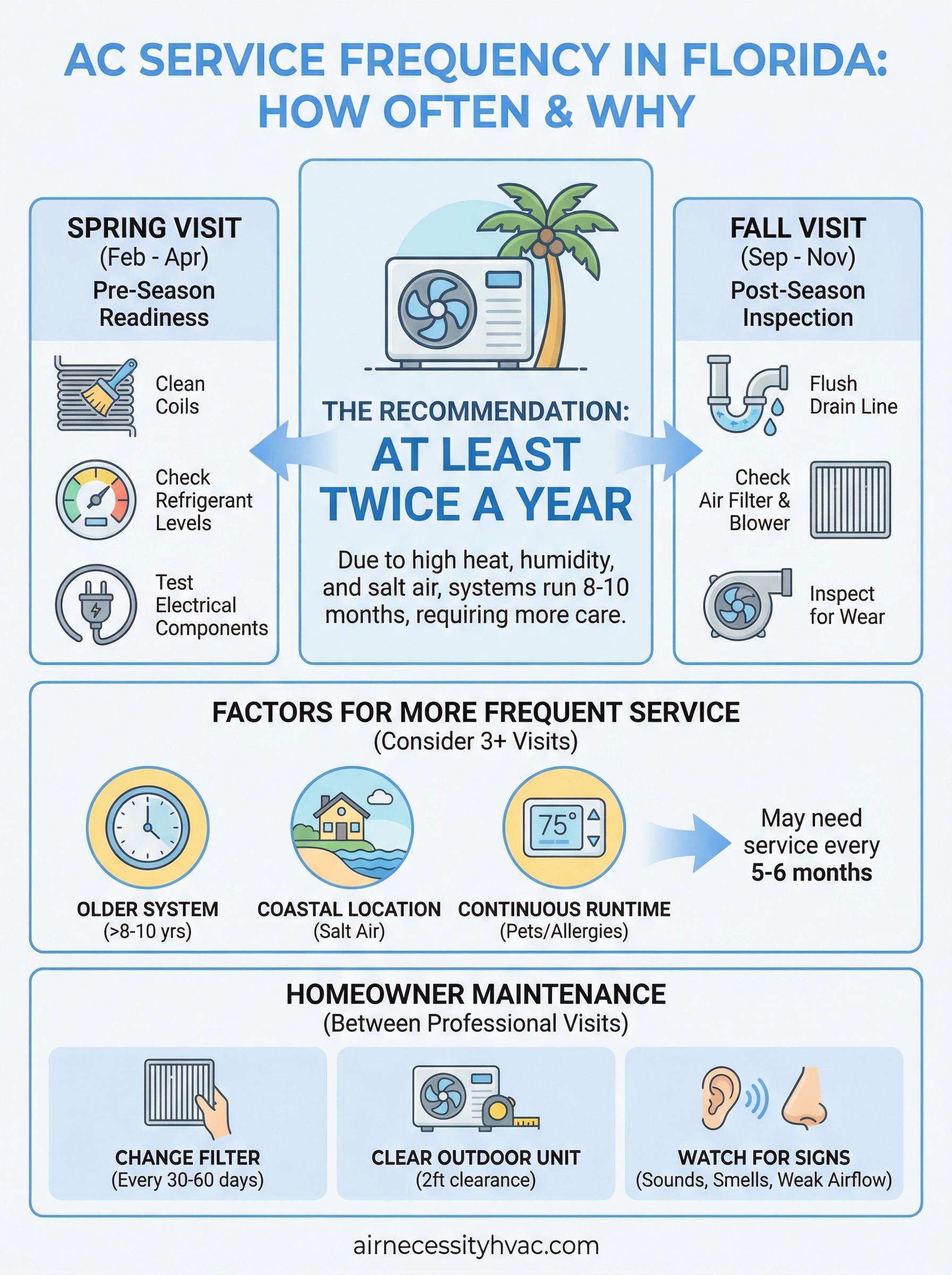
For Florida homeowners, two professional service visits per year is the practical minimum most HVAC technicians recommend. One visit should happen in late winter or early spring, before the heavy cooling season kicks in. The second visit fits well in early fall, once the worst heat has passed but while the system is still running regularly. This schedule gives a technician the chance to catch small problems before they turn into full breakdowns during peak summer heat, when wait times for repairs are longest and the discomfort is hardest to tolerate.
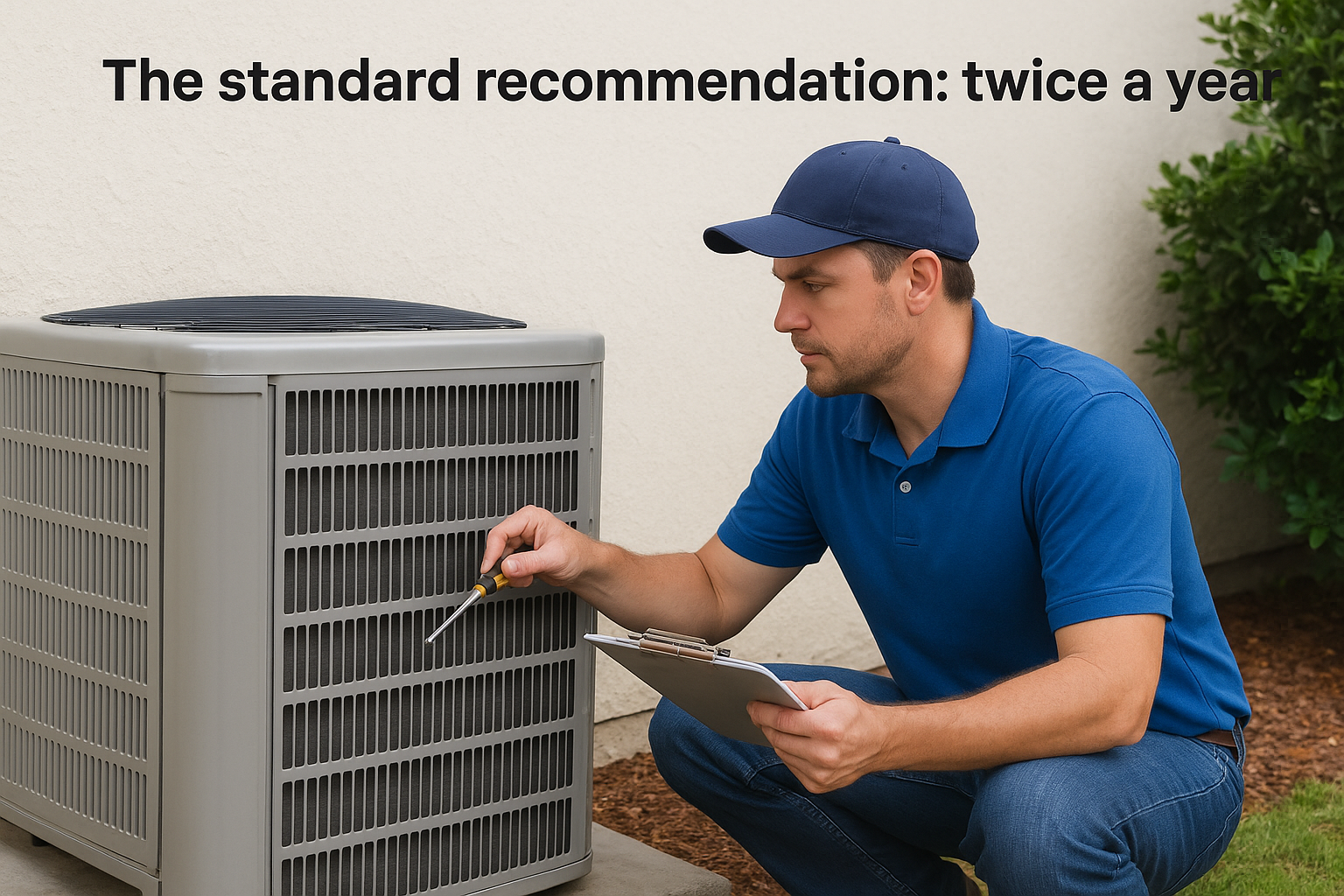
Skipping one of those annual visits in Florida doesn’t just mean a missed tune-up – it means your system runs through the hottest months of the year without anyone confirming it’s actually ready to handle them.
Here is a simple breakdown of what each visit targets:
| Visit | Timing | Primary Focus |
|---|---|---|
| Spring service | February to April | Pre-season readiness, refrigerant check, coil cleaning |
| Fall service | September to November | Post-season inspection, drain line flush, filter and blower check |
Why Florida pushes that number higher
If you’re asking how often should you service your air conditioner when your household runs it nearly around the clock, the honest answer is that twice a year covers the minimum, not the ceiling. Florida’s combination of high humidity and coastal salt air accelerates corrosion on coil fins, clogs drain lines faster than most homeowners expect, and degrades electrical connections more quickly than dry-climate systems experience. A unit in Phoenix running the same number of hours as one in Fort Myers will generally show less internal wear simply because the air it pulls in is far less corrosive.
Some households get more value from three service visits per year, particularly if the system is older, runs continuously through the night, or sits in a coastal area with direct salt air exposure. At Air Necessity, our technicians see drain line backups and coil fouling far more frequently in systems that go beyond six months between professional inspections. Your system’s age, location, and daily runtime all shape the right service frequency for your specific situation, which is why a one-size answer rarely holds up in practice.
What changes the ideal maintenance schedule
Twice a year covers most Florida households, but several factors can push that number higher for your specific system. Understanding what drives wear and breakdown risk helps you decide whether the standard schedule fits your situation or whether you need more frequent professional attention.
Your system’s age
Older systems accumulate problems faster than newer ones. If your AC is more than eight to ten years old, its components are working harder to deliver the same output, and small issues like refrigerant loss or dirty coils compound quickly between visits. A unit in that age range benefits from at least two thorough inspections per year, and in some cases three if it’s showing any signs of reduced performance.
The older your system, the less margin it has for skipped maintenance. A single missed service visit can turn a minor issue into a failed compressor.
How your home and habits affect service frequency
Your daily runtime and indoor environment shift the equation significantly. Households that run their AC continuously through the night, keep pets indoors, or have family members with respiratory sensitivities will see filters and coils foul faster than the average home. More contamination means more strain on the blower and heat exchanger, which directly shortens the gap between when service is needed.
Location within Southwest Florida plays a significant role as well. Properties within a few miles of the Gulf coast face higher salt air exposure, which corrodes coil fins and electrical connections faster than inland homes experience. If you’re asking how often should you service your air conditioner and you live close to the water, the answer is almost certainly more often than the baseline suggests. A coastal home in Cape Coral or Naples typically needs coil inspections and electrical checks closer to every five to six months rather than every twelve.
Best time of year to schedule AC service
Knowing how often should you service your air conditioner is one thing; knowing when to book those visits is what actually makes the difference. In Florida, timing your appointments around the cooling season gives technicians the best opportunity to catch problems before your unit is running at full capacity every single day.
Spring: your pre-season visit
Late February through April is the best window for your first service visit of the year. Your system has been running steadily since the previous summer, and a spring inspection gives a technician time to clean coils, check refrigerant levels, and test electrical components before temperatures climb into the 90s. Scheduling in this window also means you’re booking before the seasonal rush. By May and June, HVAC companies across Southwest Florida are fielding breakdown calls daily, and appointment slots fill up quickly.
Booking your spring service in March gives you a buffer – if a repair is needed, you still have time to get it handled before summer heat arrives.
Fall: your post-season check
September through November is the right window for your second visit. Your system has spent the summer running hard, and a post-season inspection lets a technician find wear that built up under that load. Drain lines, blower motors, and coil fins all take a beating through the peak months, and identifying issues in the fall means you’re not heading into the next spring with a system that’s already compromised.
A fall visit also covers components that are easy to overlook mid-season, like duct connections and thermostat calibration. Catching those in October costs far less than diagnosing a performance issue the following June when your system is already running under full stress.
What a professional AC tune-up includes
When you’re thinking about how often should you service your air conditioner, it helps to understand what you’re actually paying for. A professional tune-up isn’t just someone glancing at your unit. A trained technician works through a structured checklist that covers the mechanical, electrical, and airflow components of your system, so problems get caught before they become expensive failures.
What the technician cleans and inspects
Coil cleaning is one of the most important parts of any service visit. Your evaporator and condenser coils collect dust, mold, and debris over time, which forces your system to work harder to move heat. A technician also clears the condensate drain line, which is one of the most common causes of water damage and shutdown errors in Florida homes because of the humidity load the system pulls out of the air every day.
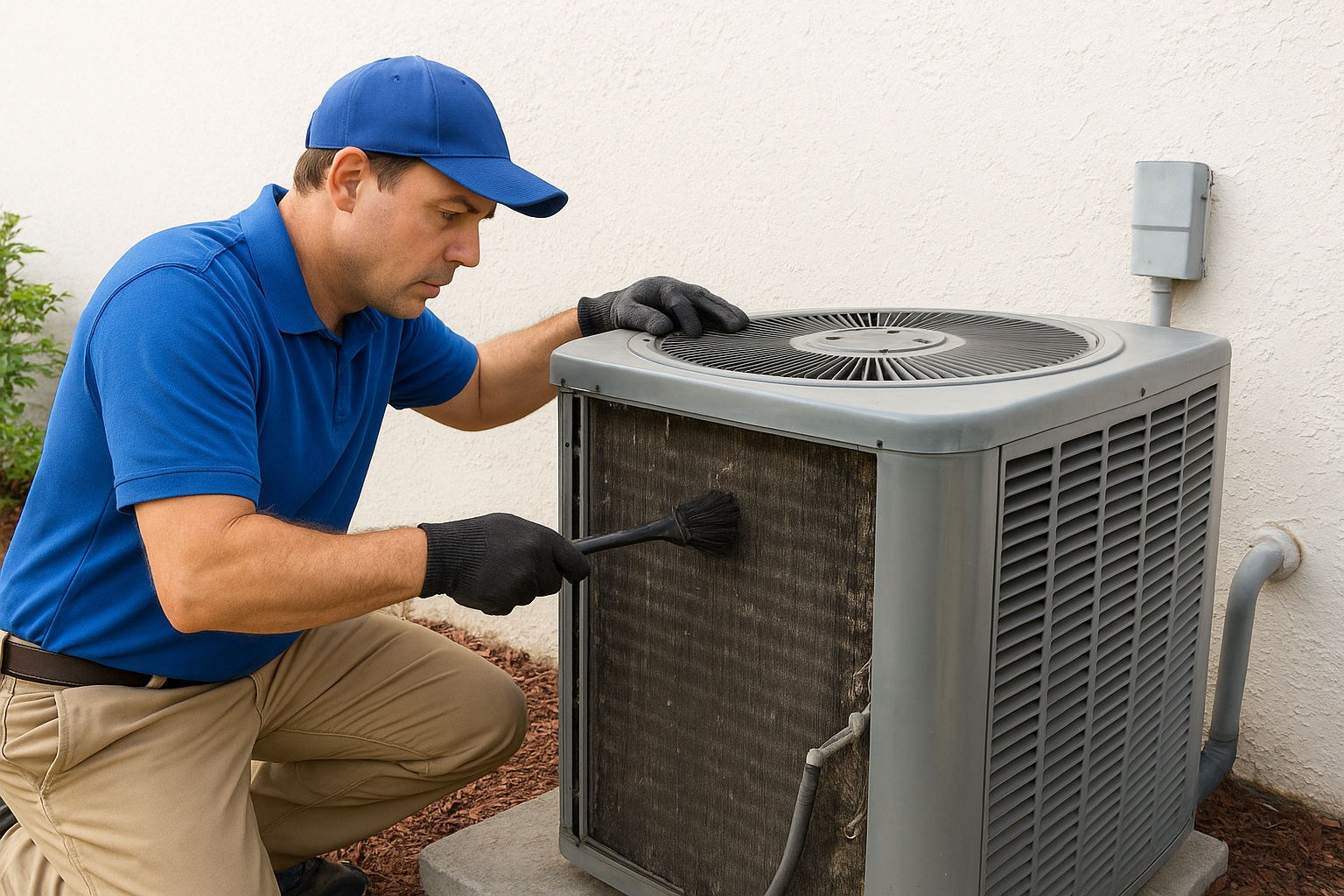
A clogged drain line can shut your system down entirely, and in Florida, that can happen within a few months of your last service visit if the line isn’t flushed properly.
Here is a quick look at what a standard tune-up typically covers:
| Category | What Gets Done |
|---|---|
| Coils | Cleaned and inspected for corrosion or damage |
| Drain line | Flushed to prevent water backup and mold buildup |
| Air filter | Checked and replaced if needed |
| Refrigerant | Measured and topped off if levels are low |
| Electrical connections | Tightened and checked for wear or corrosion |
What gets tested and adjusted
Electrical components like capacitors and contactors fail more often in Florida because of the heat and runtime demands. Your technician will test these parts directly rather than just looking at them, since a capacitor can appear fine but still be operating below spec. Thermostat calibration and airflow measurements round out the visit, confirming your system is delivering the output it should be based on your home’s square footage and current conditions.
What you can do between service visits
Professional service handles the deep work, but what you do between appointments directly affects how well your system holds up. A few consistent habits reduce the strain on your AC and help it reach its next tune-up in better shape.
Change your filter on schedule
Your air filter is the first line of defense against dust, pet dander, and debris entering your system. In Florida’s climate, filters clog faster than the package instructions typically suggest. Most households should swap theirs every 30 to 60 days, not every 90. If you have pets or anyone in your home deals with allergies, lean toward the shorter end of that range. A clogged filter forces your blower to work harder, raises your energy bill, and accelerates wear on components your technician just serviced.
A dirty filter doesn’t just hurt air quality – it puts direct mechanical strain on your system every hour it runs.
Keep the outdoor unit clear
Your condenser unit needs adequate airflow to shed heat efficiently. Check the area around it every few weeks and remove any leaves, grass clippings, or debris that have built up against the fins. Give the unit at least two feet of clearance on all sides. You don’t need to hose it down or take it apart yourself, but keeping the surrounding area clean between service visits helps the unit run closer to its rated efficiency.
Watch for early warning signs
Knowing how often should you service your air conditioner matters, but so does recognizing when something needs attention before the next scheduled visit. Pay attention to unusual sounds, weak airflow, or moisture near the indoor unit. If your system starts short cycling, takes longer to cool your home, or produces musty smells, contact a technician rather than waiting for your next appointment. Catching a problem early almost always costs less than letting it run until something fails.
A simple plan to keep your AC reliable
Florida’s climate doesn’t leave much room for guessing when it comes to AC maintenance. The clearest answer to how often should you service your air conditioner in this region is twice a year minimum, with spring and fall visits timed around the cooling season. Add consistent filter changes every 30 to 60 days and keep your outdoor unit clear, and you’ve covered the basics that separate systems lasting 15 years from ones that fail at 10.
If your system is older, coastal, or running around the clock, three visits a year makes more sense than two. Small issues caught early stay small; ones left alone through a Florida summer rarely do. When you’re ready to get your system on a reliable maintenance schedule, contact the Air Necessity team for honest, straightforward service from technicians who get paid to fix problems, not to create them.