
Your AC runs almost year-round in Southwest Florida. Between the humidity, the heat, and the salt air, your system takes a beating that homeowners in cooler climates simply don’t deal with. Without the right central air conditioner maintenance tips, that wear and tear quietly stacks up, leading to higher energy bills, unexpected breakdowns, and a shorter lifespan for your unit.
The good news? Most of the upkeep that keeps your system running strong isn’t complicated. Some of it you can handle yourself on a Saturday morning, and the rest is straightforward work for a qualified technician. Either way, a little prevention goes a long way toward avoiding a mid-August emergency when your AC decides it’s had enough.
At Air Necessity, we service homes across Lee, Collier, and Charlotte Counties, and we see the same preventable problems over and over again. Our non-commissioned technicians have no reason to upsell you, just to tell you what actually needs attention. Below, we’re sharing five maintenance tips that will help you protect your investment, cut your cooling costs, and keep your home comfortable all year long.
1. Schedule a preseason AC tune-up
A professional tune-up is the single most effective step in any central air conditioner maintenance plan. Before the heat hits hard, a qualified technician goes through your system top to bottom, catching small issues before they become expensive repairs in the middle of summer.
What a central AC tune-up should include
A proper tune-up covers more than a quick visual check. Your technician should go through a full inspection that touches every major component of your system. A solid service visit should cover:
- Evaporator and condenser coil inspection and cleaning
- Refrigerant level check and leak test
- Electrical connection testing and tightening
- Lubrication of moving parts and thermostat calibration
- Condensate drain line flush and airflow measurement
When to schedule it in Southwest Florida
In Southwest Florida, late February through March is the right window. That gets your system serviced before the heat and humidity spike in April and May, giving you time to address anything the technician finds.
Waiting until May means you’re competing with everyone else who skipped their winter checkup, and appointment availability gets tight fast.
Book your preseason tune-up before March ends to avoid the rush and handle any repairs while parts and scheduling are still easy to arrange.
How to pick an honest HVAC company
Look for a company with licensed and insured technicians, verified local reviews, and a clear breakdown of what the service includes before you agree to anything. Ask directly what is covered so you know what you’re paying for.
One reliable signal is whether technicians work on commission. Commission-based pay creates pressure to find problems, whether they exist or not. A non-commissioned crew has no financial reason to add items to your invoice.
What it typically costs and what can change the price
Most homeowners pay $75 to $200 for a standard tune-up in Southwest Florida. The age of your unit, system size, and any issues found during the visit will all affect the final number. If a company quotes you well below that range, ask exactly what the service covers before you commit.
2. Change your air filter on a Florida schedule
Your filter does more work here than in most parts of the country. Florida dust, pollen, and mold spores load up a filter faster than a typical climate, and a clogged filter forces your system to work harder, driving up your energy bill and wearing out components ahead of schedule.
How to choose the right filter type and MERV rating
A MERV rating between 8 and 11 hits the right balance for most Florida homes. It captures dust, pollen, and mold without restricting airflow the way higher-rated filters can when used in standard residential systems.
How often to replace filters with pets, allergies, and dust
In Florida, replacing your filter every 30 to 45 days is the standard for most households. If you have pets or allergy sufferers at home, check it every three weeks and swap it out whenever it looks gray and dense.
A dirty filter is one of the most common and most preventable causes of AC breakdowns in Florida homes.
How to change filters without hurting airflow
Always match the exact dimensions printed on your current filter and confirm the airflow arrow on the new filter points toward the unit. A backwards or wrong-size filter lets unfiltered air bypass the system entirely.
Signs your filter is causing AC performance problems
Watch for reduced airflow from your vents or a system that runs longer than usual without cooling the space. Visible dust buildup around your return vent is another direct signal your filter needs immediate attention.
3. Keep the outdoor condenser clean and breathing
Most central air conditioner maintenance tips focus on filters, but the outdoor condenser matters equally. Florida’s plant growth, humidity, and debris clog it faster than in cooler climates, straining the compressor and raising energy bills.
How to clear vegetation and debris the right way
Maintain at least two feet of clearance on all sides, and check the unit after any storm. Clear the following regularly:
- Leaves and seed pods from the top of the unit
- Grass clippings blown against the sides
- Vines or shrubs creeping into the clearance zone
How to rinse the condenser coil safely
Cut power at the disconnect box before you touch the coil. Rinse the fins with a garden hose on a gentle setting, working from the inside out to push dirt outward rather than deeper into the coil.
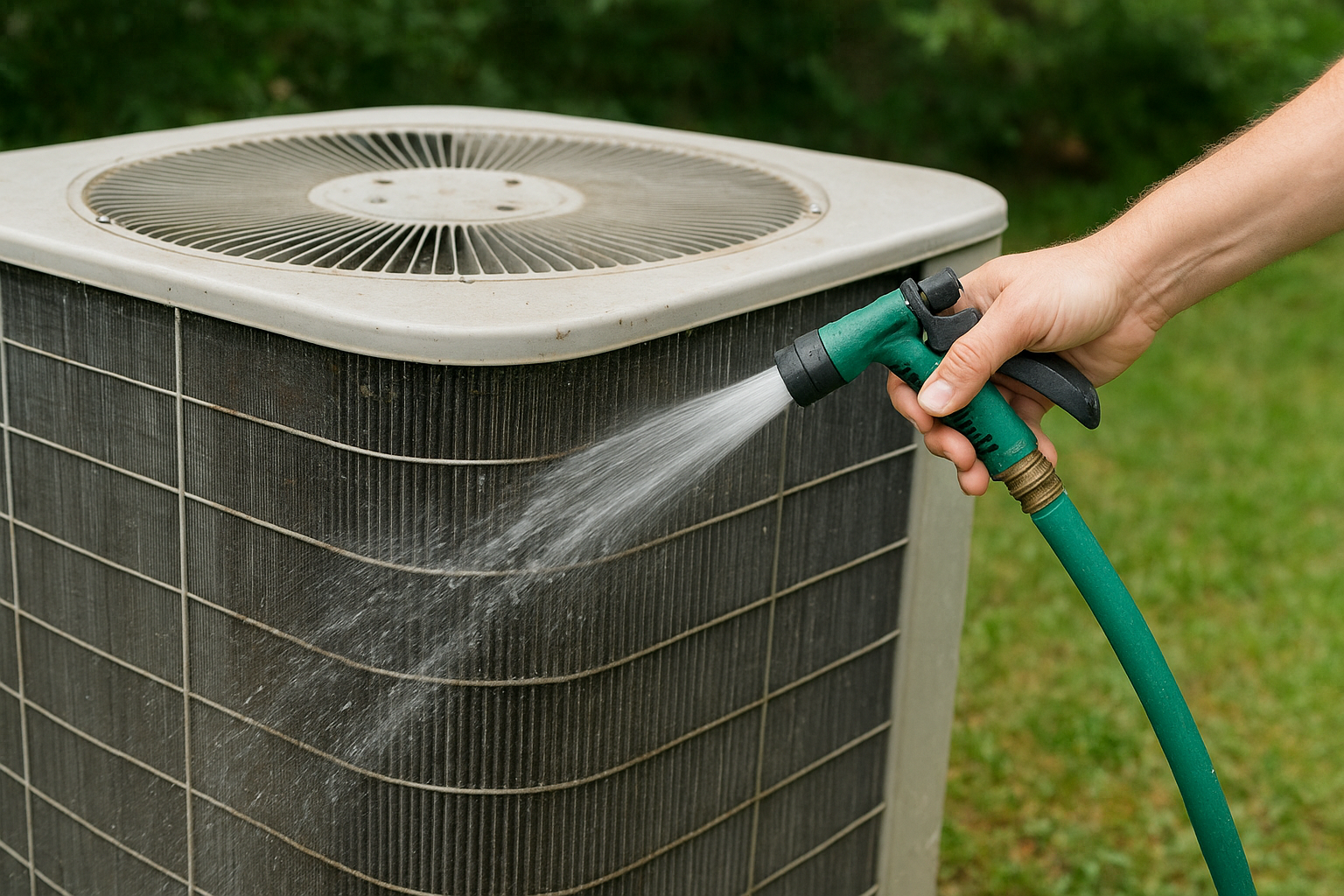
Rinsing from the outside in forces debris deeper and cuts airflow, so always work from the inside out.
A once-a-year rinse works for most homes, though units near heavy tree cover may need it more often.
What to avoid so you do not damage fins or electrical parts
Never use a pressure washer on the condenser fins. The thin aluminum bends easily, and damaged fins cut airflow just as much as built-up dirt. Keep water away from any electrical components or wiring during the rinse.
Warning signs the outdoor unit needs professional cleaning
If your system runs constantly without cooling the house, or you spot ice forming on the unit, call a technician. Both point to airflow or refrigerant problems that surface cleaning cannot fix.
4. Prevent drain line clogs and water damage
Florida’s humidity makes your condensate drain line one of the most vulnerable points in your system. Your AC pulls moisture from the air constantly, routing that water through a drain line that stays wet and warm all season long.
Why Florida humidity clogs drain lines so fast
Your system removes significant amounts of moisture daily in Southwest Florida’s climate, creating the perfect environment for algae and mold to grow inside the line. A partial blockage can back water up into the air handler within days, causing ceiling damage that far exceeds any HVAC repair cost.
How to spot a clogged condensate line early
Check for these early warning signs before a clog turns into a water damage problem:
- Standing water in the drip pan beneath your air handler
- Water stains appearing on the ceiling near your unit
- A musty smell from your vents during operation
If you see water in the drip pan, address it the same day. Overflow damage to ceilings and drywall adds up fast.
How to clear and flush the drain line safely
Clearing the line yourself takes less than five minutes and prevents the most common cause of water damage in Florida AC systems. Follow these steps:
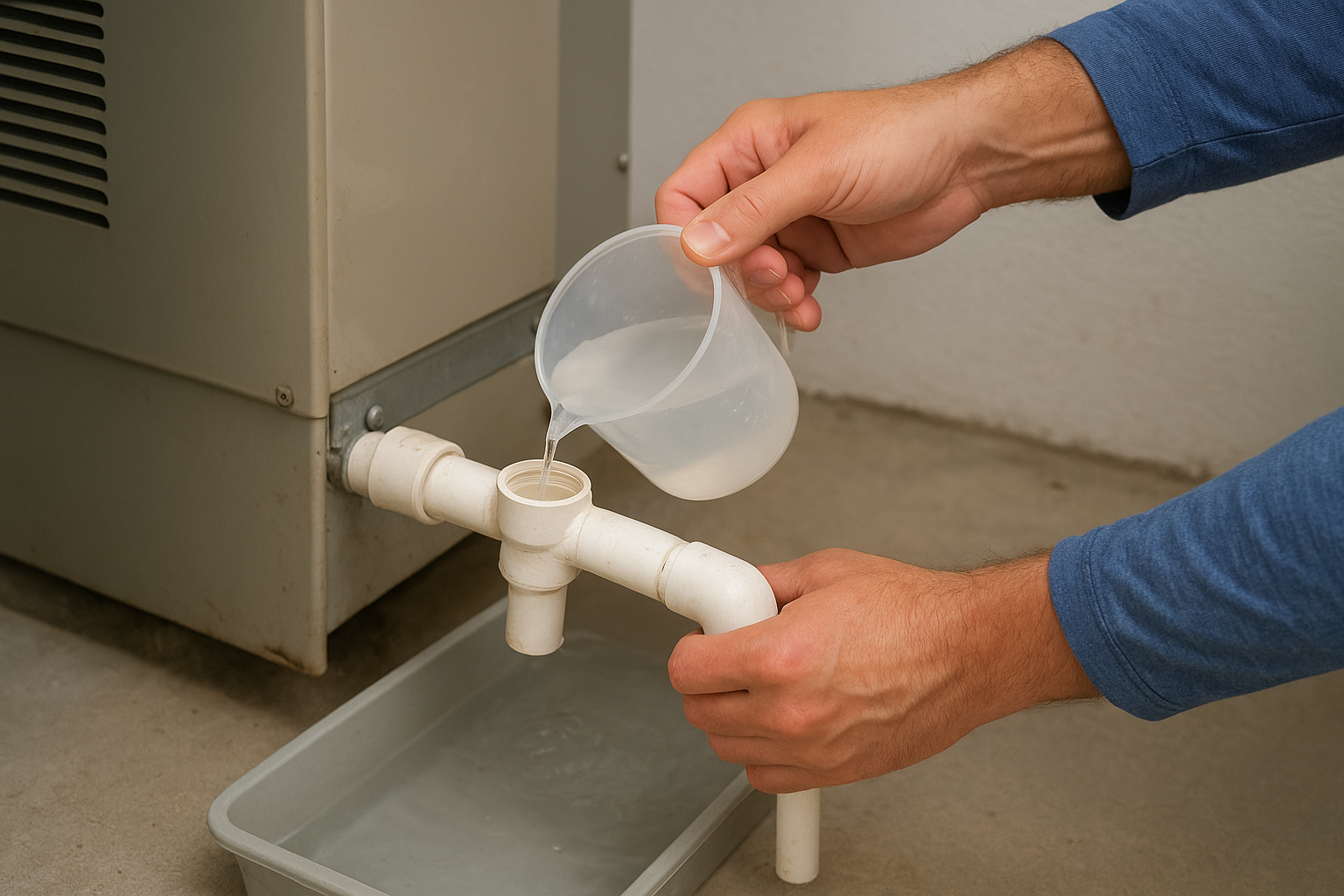
- Locate the PVC access port on the drain line near your air handler
- Pour one cup of distilled white vinegar into the port
- Wait 30 minutes, then flush with warm water
Repeat this process monthly during peak cooling season.
When a float switch or pan issue needs a technician
If your system shuts off on its own and the pan holds water, your float switch triggered to prevent an overflow. A technician needs to clear the blockage and confirm the switch and pan are both functioning correctly before you restart the system.
5. Maintain airflow inside the house for efficiency
Even with a clean filter and a serviced condenser, blocked or leaky airflow inside your home undoes most of that work. Keeping air moving freely through your system is one of the most overlooked central air conditioner maintenance tips for Florida homeowners.
How to keep supply and return vents unobstructed
Furniture, rugs, and curtains placed over supply or return vents force your system to work harder to move the same volume of air. Walk each room and confirm every vent has at least 12 inches of clearance on all sides.
How to spot duct leaks and pressure issues without tools
Hold a thin piece of tissue paper near duct connections in unconditioned spaces like your attic or garage. If it flutters near a seam, air is escaping before it reaches your living space.
Duct leaks in attics are especially costly in Florida because you’re pumping cooled air directly into extreme heat.
Thermostat habits that reduce AC strain in high humidity
Set your thermostat to “auto” rather than “on” so the fan only runs when the system is actively cooling. Running the fan continuously in Florida humidity recirculates moisture before the coil has a chance to remove it.
Red flags that point to a deeper system problem
Uneven cooling between rooms or a system that cycles on and off rapidly both indicate airflow or refrigerant issues that go beyond basic maintenance. Call a technician if adjusting vents and replacing the filter does not resolve the problem.
A simple plan to stay cool all summer
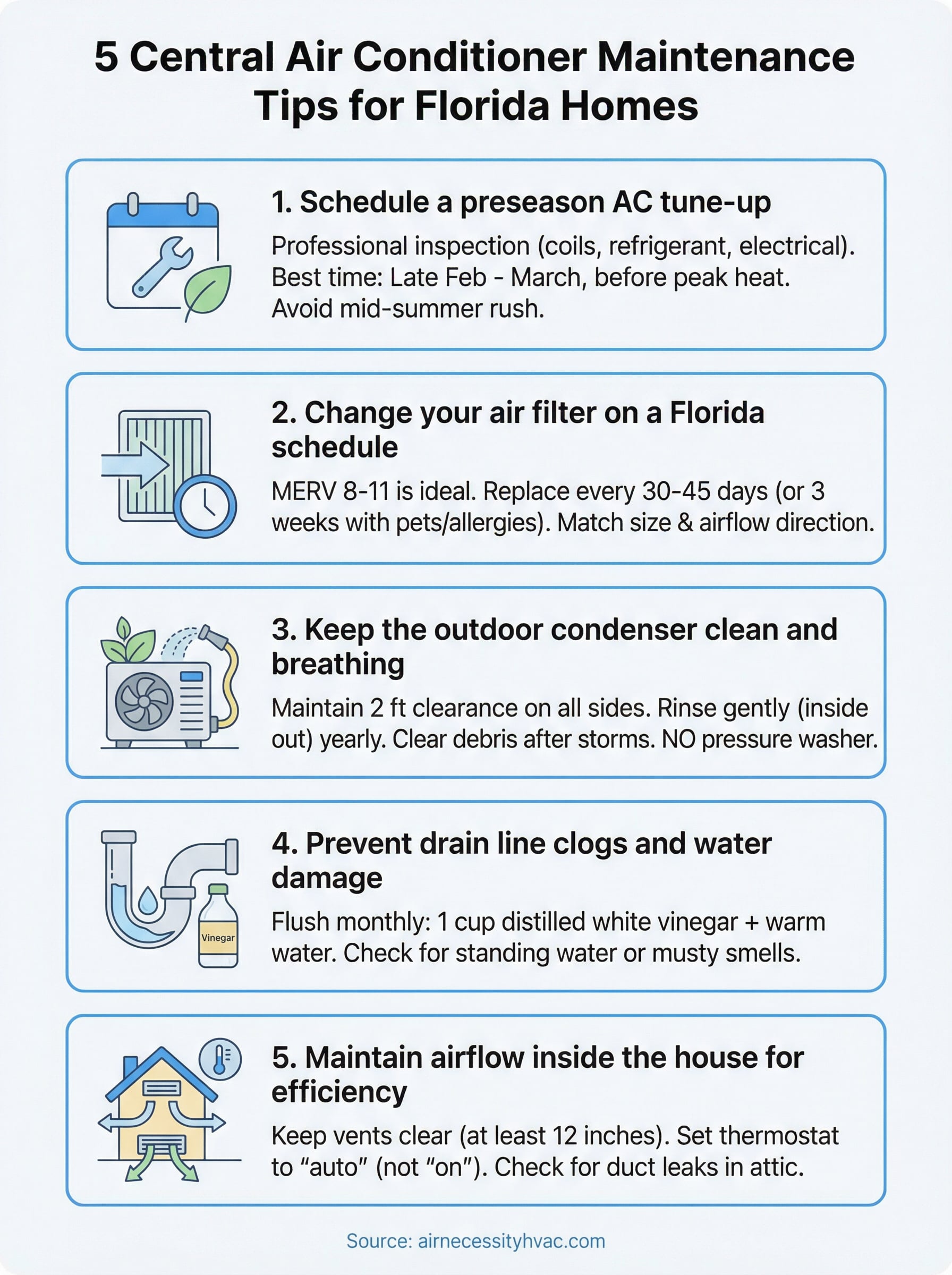
These five central air conditioner maintenance tips give you a clear, repeatable path to fewer breakdowns, lower energy bills, and a system that holds up through Florida’s long cooling season. Each step builds on the last, and none of them require specialized tools or technical knowledge beyond what we’ve covered here.
Start with your preseason tune-up, stay consistent with your filter schedule, and take a few minutes each month to flush your drain line and clear your condenser. Those habits alone prevent the majority of problems we see in Florida homes year after year. Your system works hard in this climate, and consistent maintenance is the most direct way to protect that investment.
When you need professional help, work with a team that gives you straight answers without pressure. Schedule your AC service with Air Necessity and get honest recommendations from non-commissioned technicians who focus on what your system actually needs, nothing more.